Page overview
Using pedestrian-first delivery models in London’s high-footfall areas

With dense city centres facing increasing congestion, emissions, and competition for curb space, on-foot deliveries by on-foot deliveries with pushcarts are reducing traffic congestion while maintaining a safe and reliable local service. In London, these pushcarts are becoming an increasingly common sight, navigating crowded streets from Hackney to Westminster, while reaching many pedestrian areas more efficiently than traditional delivery vehicles.
On-foot delivery partners delivered more than one million packages to customers' doorsteps in London in 2025.
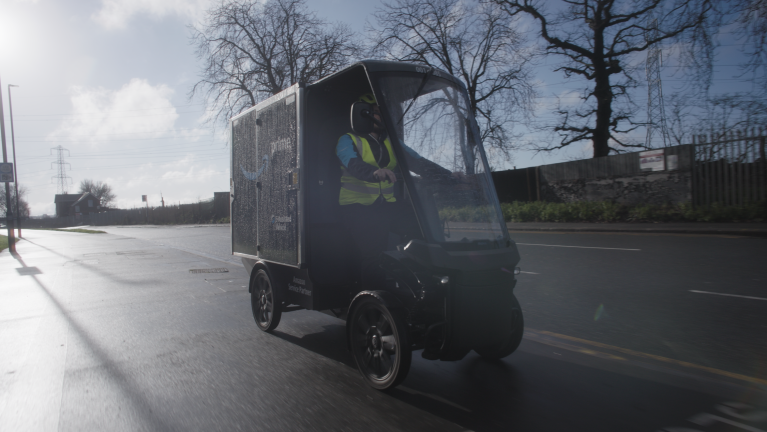
Electric cargo bikes are also shaping how we make deliveries in London, as well as busy cities like Manchester and Norwich the UK. As part of a long-term investment in electrifying and decarbonising the transportation network we use, electric cargo bikes can support millions of annual deliveries, while reducing congestion and emissions.
In cities with historic centres and limited traffic zones, electric cargo bikes and push carts can navigate narrow streets and pedestrian areas that larger vehicles can't reach, ensuring residents receive fast deliveries while respecting the quietness and character of their communities.
Since 2022, Amazon's Delivery Service Partners have cycled more than 900,000 miles in the UK on electric cargo bikes, delivering packages that would have otherwise gone out in vans. Last year alone, Amazon's Delivery Service Partners delivered millions of packages using electric cargo bikes and on-foot deliveries in the UK and Ireland, with dedicated teams operating out of 12 hubs located in London, Manchester, Norwich, Belfast, and Glasgow.
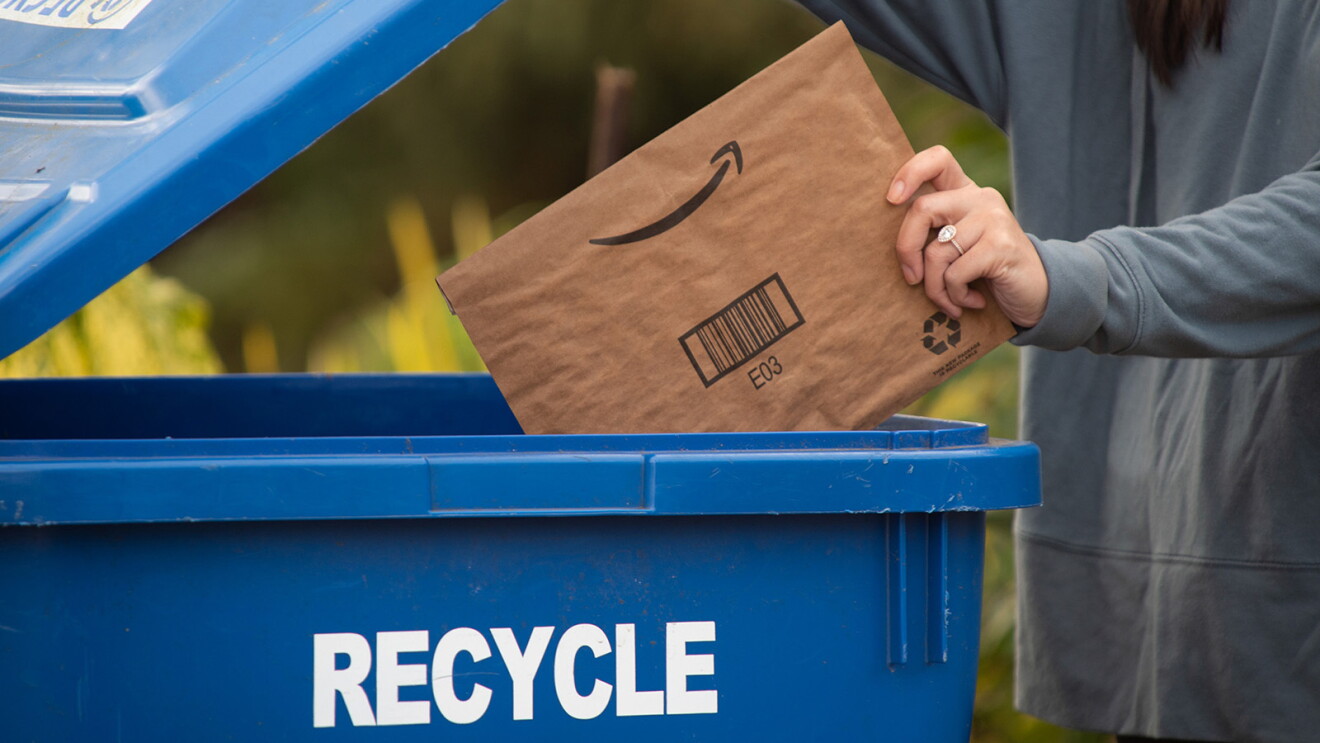
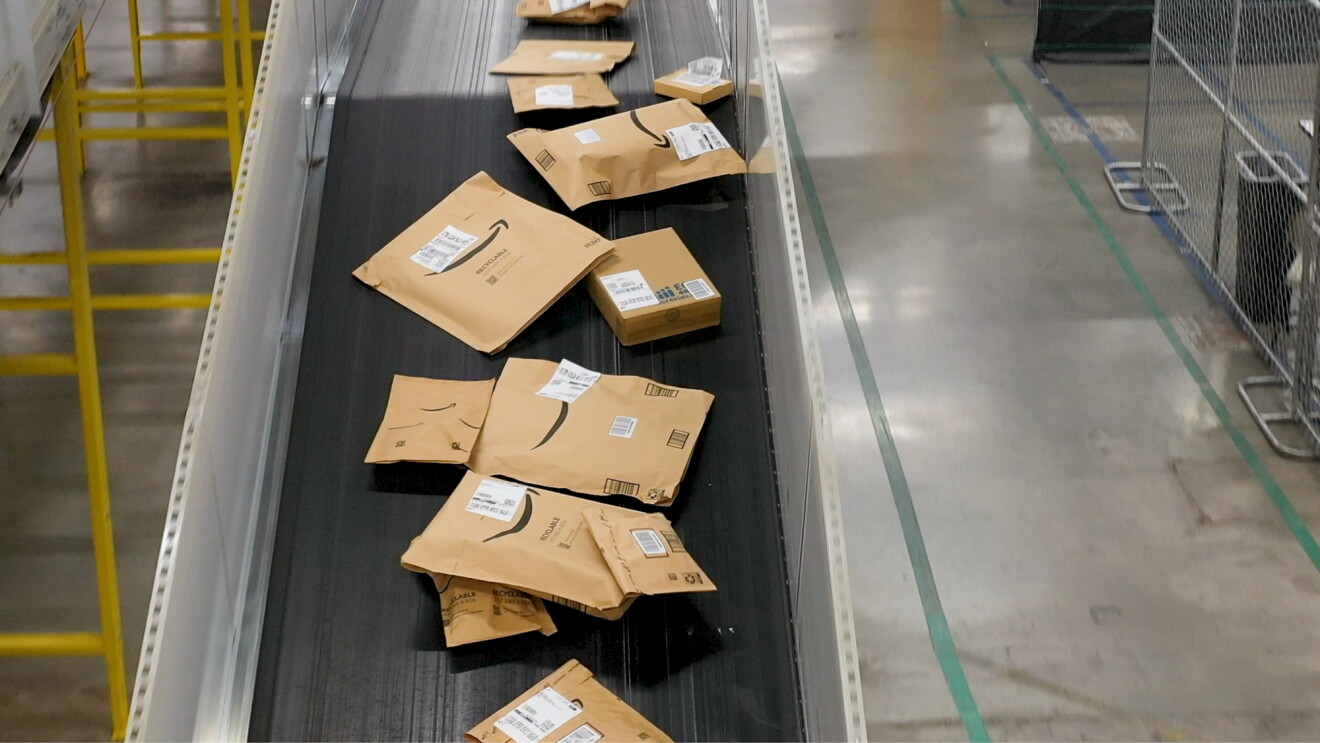
Amazon uses machine learning to determine the most efficient packaging for items to ship safely to customers. By right-sizing packaging and increasing the use of paper bags, cardboard envelopes, and manufacturer packaging through the Ships in Product Packaging program, we reduce unnecessary materials while optimising how parcels move through our network.
More than 50 percent of orders in Europe now ship in reduced packaging or in their original packaging with just a shipping label attached. These changes do more than cut waste. They allow delivery vehicles to carry more packages per trip, helping reduce the number of trips needed overall and improving efficiency across the last mile.
Since 2015, Amazon’s packaging reduction efforts have helped avoid more than 4 million metric tons of packaging, equivalent to more than 1,905 times the weight of London’s iconic London Eye.
Stories we think you’ll like